Overcoming Cellular Barriers: Implications for Industrial Biotechnology

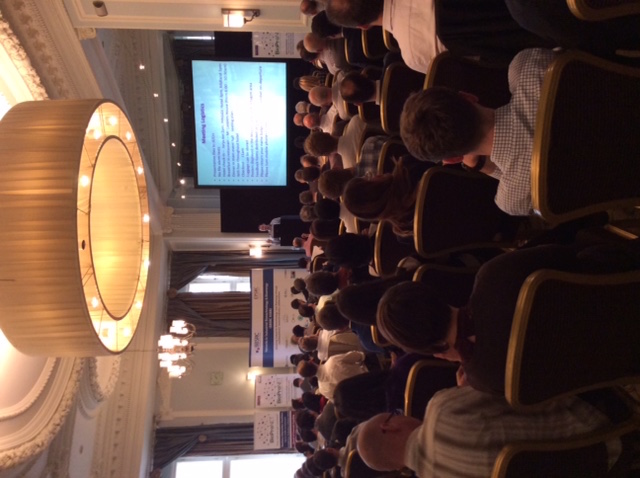
Many thanks to everyone who attended this event; we hope that you found it useful and informative. A total of nine new project ideas were identified at the meeting, together with champions to take them forward. If you attanded the meeting and need further information on the projects and/or champions, please contact Charlotte

FullSizeRender

July 6th and 7th 2016, Birmingham Hilton Metropole

The function of membranes in bacterial, yeast and mammalian cell factories are an important but underappreciated parameter in optimizing recombinant protein quality and yields.  In addition, the delivery of a therapeutic protein to its target often requires that protein to cross one or more membranes.

Three BBSRC NIBB — BioCatNet, BioProNET and CBMNet — are hosting a two day event to address the challenges of protein secretion and targeting in industrial biotechnology.  Three themes form the backdrop of the meeting: Protein trafficking in eukaryotic cells, protein export from bacterial cell factories and delivery of therapeutic proteins to targets.

The meeting will identify how UK academic and industrial strengths can be exploited to enhance application to future challenges, by combining presentations from leading academics and industrialists to inform and stimulate facilitated discussions. The overall aim is to identify collaborative research projects and teams to bid for funding.

To register, please click here.

Wednesday 6th July, 2016
10.30 Registration
11.00 Welcome, Objectives and Funding available – Me profiles Network Directors
Session 1: Protein Trafficking in Eukaryotic Cells
11.15 How UCB are beginning to address protein trafficking both  in-house and with external collaborators Bernie Sweeney – UCB
11.30 Obtaining a molecular understanding of antibody secretion Andrew Peden – University of Sheffield
Session 2: Protein Export from Bacterial Cell Factories
11.45 Project ‘PeriTune’ -Periplasmic export in e. coli Cobra Biologics
12.00 The Tat pathway as a biotechnological tool for the expression and export of heterologous proteins in E. coli Kelly Walker – University of Kent
Session 3: Delivering Therapeutic Proteins and other compounds substrates/drug molecules 
12.15 Engineering therapeutic proteins for cell entry: the natural approach Ron Jackson, MedImmune
12.30 Engineering biomimetic polymers for intracellular protein delivery Rongjun Chen – Imperial College London
12.45 Review of presentations and scene-setting for discussions to follow
13.00 Lunch and networking
14.00 Parallel Discussions 1
Protein Trafficking Protein Export from Bacterial Cell Factories Delivering Therapeutic Proteins and other molecules
15.25 Report from 3 discussion sessions; definition of topics of interest; themes to be expanded for further development of projects in groups
16.05 Coffee and check-in
16.45 Parallel Discussions 2
Protein Trafficking Protein Export from Bacterial Cell Factories Delivering Therapeutic Proteins and other molecules
17.45 Groups to define initial project areas to develop and for participants to identify their interests for further involvement in day 2 project pitching
18.00 Close
18.30 Networking drinks
19.30 Dinner


Thursday 7th July, 2016
09.00 Technology Drivers
09.00 Imaging vesicle transport in cells Gero Steinberg – University of Exeter
09.25 Molecular interactions in membranes and applications of solid state NMR Boyan Bonev – University of Nottingham
09.50 Q & A
10.00 Project Pitching Projects identified at end of day 1 – on pin boards; champion for each gives 5 minute pitch. Formalise interested parties and refine groups for discussions post-coffee break
10.45 Coffee
11.00 Break out Discussion Sessions within project groups
12.30 All Groups reconvene and share ideas – finalise groupings of individuals to carry planning on to next stage
13.00 Lunch
14.00 BIV writing session – on-the-spot applications
15.00 Close


BioProNET Supports Synthetic Portabolomics Project

BioProNet is delighted to have supported Professor Natalio Krasnogor from the University of Newcastle in his successful grant application entitled ‘Synthetic Portabolomics: Leading the Way at the Crossroads of the Digital and the Bio Economies’. Natalio and his co-investigators were awarded a total of £8.1m of which £5.3M was from EPSRC, £2.5M was from the University of Newcastle and £0.4M was from industry collaborators.

Natalio’s work will be focused on a novel area of synthetic biology, called portabolomics. Currently, novel genetic circuits are designed for a single organism (such as E.coli); the circuit needs to be re-engineered for each new organism that is studied – a process which is time consuming and costly. Natalio and his multidisciplinary team aim to standardise the connection between a given genetic circuit and the chassis organism, by understanding the networks of molecular processes that occur in a cell. They will develop a set of academically and industrially useful organisms where the ‘plug-in’ points for the genetic circuit will be the same for each of the organisms, allowing the genetic circuit to be moved from one organism to another.

Natalio also received support from the Centre for Process Innovation,CERN, Croda, Ingenza, Kajeka, Labgenius, Microsoft, Prozomix, SilicoLife, TerraVerdae Bioworks, The Genome Analysis Centre, University of Edinburgh and University of Liverpool.

More information about the grant
Natalio Krasnogor’s home page
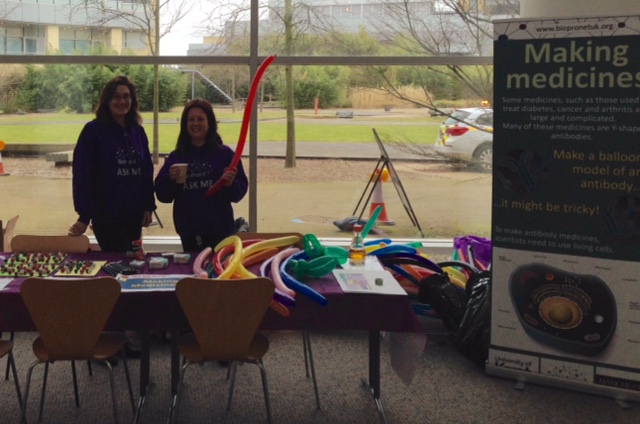
BioProNET at Big Bang @ Discovery Park

BioProNET recently took part in a science fair at Discovery Park in Kent, which aimed to inspire students to study STEM (science, technology, engineering and maths) subjects.

Around 900 school children, aged 11-14 attended the event, and many learned the difficultities in making antibody-based medicines by trying to make replica biologics out of modelling balloons.

The event was covered in a local newspaper and by Kent and Medway STEM, including some pictures of the students’ models. Although the event was called ‘Big Bang’ we’re happy to report that not too many of our balloons burst!

FullSizeRender

Protein Glycosylation Workshop

Challenges and Opportunities for Optimising Protein Glycosylation
Tuesday February 9th 2016, Imperial College London

Increasing efforts are underway to produce recombinant proteins that have a homogeneous glycan profile, which will lead to products with improved in vivo characteristics (such as half‐life and efficacy) and hence offer substantial cost benefits. Studies involve the genetic engineering of cell lines, process modifications (for example, the addition of relevant precursors) and in vitro modification of recombinant proteins. These efforts will also facilitate the use of quality by design framework for the development of biologics.

This event, jointly supported by IBCarb and BioProNET (two BBRSC networks in Biotechnology and Bioenergy), aims to bring together researchers involved in recombinant protein production with scientists involved in product characterisation.

The workshop will feature keynote speakers as well as round table discussions to identify the grand challenges that arise from the production, regulation and technical aspects of recombinant protein glycosylation.  Attendees should also have the opportunity to form working groups for funding applications.

Confirmed speakers include David James (University of Sheffield) and Mitul Patel (GlaxoSmithKline).

Travel bursaries:
A number of travel bursaries are available for early-stage career researchers (PhD students and post-docs) to attend this event. For more information about travel bursaries from IBCarb please see www.ibcarb.com/funding or contact Claire Doherty. For travel bursaries from BioProNET please contact Charlotte Harrison.

For more information and to register for the event please use this link. Please register no later than Monday February 1st.

A growing membership

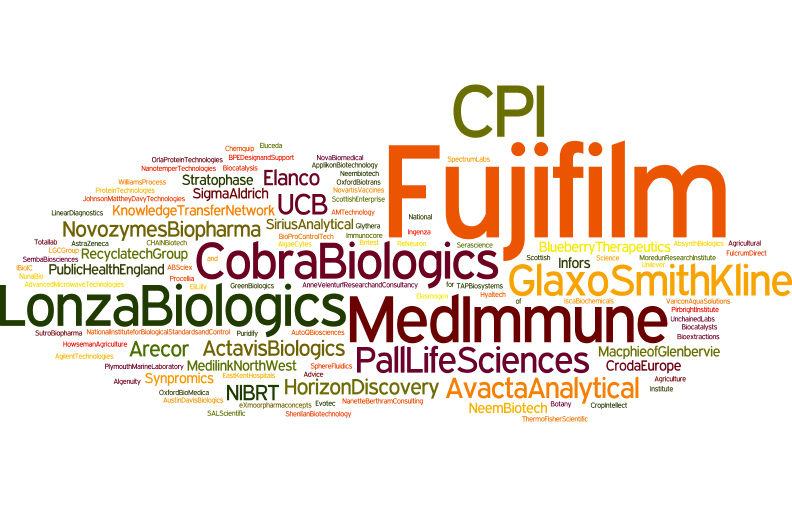
We currently have around 530 members, of which over 35% come from industry and non-university institutions. Around 80 different companies — from SMEs to large multinationals — have employees who are members of BioProNET. The word cloud below represents companies from which we have members. If you’d like to join them, click here.
industry wordle

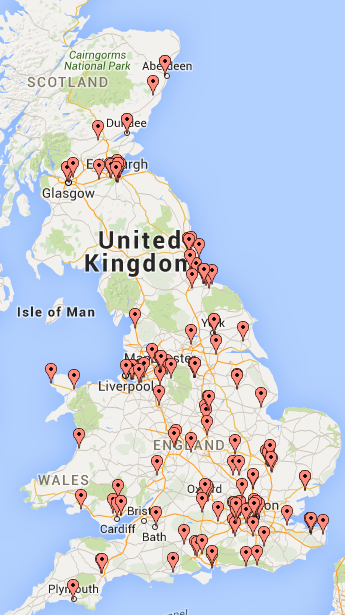
Our members come from almost all corners of the UK – see the member map below. In addition, we have members in Ireland, China, Kenya, USA, France and Malaysia.

Screen Shot 2015-10-28 at 16.23.31