Case studies of BioProNET-funded projects

Here are some highlights of completed BioProNET-funded projects – proof of concept funding, business interaction vouchers, workshop funding and scientific exchange awards.

Clicking on each title will open a pdf version of that case study. To see all the case studies in full on this website, click on the purple bar below the titles.

A new top-down mass spectrometry method for the rapid analysis of biopharmaceuticals
Analysis of historical bioprocessing data gives clues to microbial culture performance
Scale-up of vaccine production in a microalgal host for animal trials
Cobra Biologics – an interview with Daniel Smith
BioProNET early career researchers get more business acumen!
Molecular imprinting for sustainable downstream processing of biopharmaceuticals
Assessing the production of diagnostic proteins in plant cell cultures
An express route to biopharmaceutical production
A machine learning poly-omics classifier to improve protein production in CHO cells
Scientific exchange visit boosts separation technologies collaboration
Speeding up and slowing down: altering translation speed to enhance protein yield
Hijacking intracellular storage bodies to produce difficult to express proteins
Developing a novel fluorescence-based biopharmaceutical quality control technology
Design & testing of a membrane
photobioreactor
for advanced biologic production
Collaborative development of glycolipid separation technology to reduce costs
BioProNET funding drives the use of motor proteins for nanopore DNA sequencing
BIV funding grows algae bioprocessing collaboration
BIV funding lights up collaboration on fluorescent protein expression in microalgae
PoC study shows protein synthesis errors can cause activity losses in recombinant protein
Warwick and JEOL Strike Gold in Electron Microscopy Collaboration
Dynamic partnership aims to reduce cell harvest time
Cobra and Lancaster partnership helps unravel new analytical tool for DNA topology
Collaboration creates a recipe for success in cell-free protein synthesis
Edinburgh and Recyclatech Join Forces to Recover Microbial By-Products
Sandpit Meeting Builds Collaboration Workshop
Exchange visit funding seeds early career researcher collaborations
Scissor technology cuts out a collaboration between Bath and Arecor

ECR resources

Five things to leave off your industry CV
When it comes to writing an industry CV, less is more. The objective statement, job dutues and a publication list should all go.
https://jobs.newscientist.com/en-gb/article/5-things-intelligent-scientists-should-leave-off-their-industry-cvs/

Preparing future professionals by enhancing workforce readiness
Nature Biotechnology 34,111–113doi:10.1038/nbt.3459
A new course aims to help combat the absence of sufficient workforce preparedness for graduate students and postdoctoral fellows.

Vitae website: Vitae is an organisation that works to meet society’s need for high-level skills and innovation. Vitae is dedicated to realising the potential of researchers through transforming their professional and career development.

The future of the postdoc
Intersting article from Nature News on the “post-doc pile-up”:
There is a growing number of postdocs and few places in academia for them to go. But change could be on the way. Click here for the full story.

Is the idea of the postdoc position obsolete in today’s scientific landscape?
Responses to the above question, asked by Science.

Emerging network of resources for exploring paths beyond academia
An article that looks at the expanding collection of resources is helping trainees acquire important knowledge about careers outside academia – it’s quite US-focused but the points reaised are widely applicable.

A look back at 2016

31769325035_36b90cd1be_o

Third annual meeting science meeting
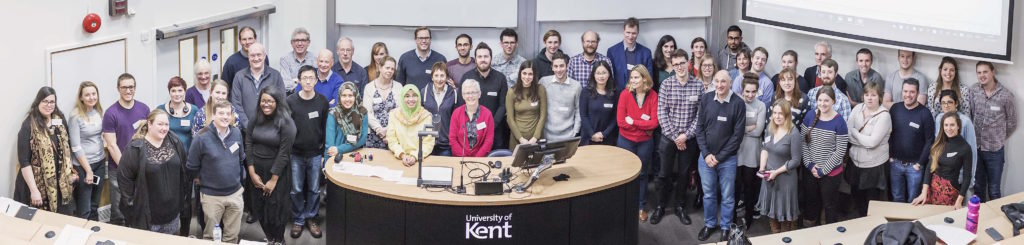
Our 3rd annual science meeting, held at the East Midlands Conference Centre, was attended by over 160 BioProNET members. As well as speakers from the UK, there was a strong international theme to the event; over half the speakers were international, and our two keynote speakers — Bill Barton and Pete Tessier— were from the USA. More details here.

Outreach events
BioProNET, together with the University of Kent, took part in the Big Bang Near Me and Chemistry at Work events, both of which aimed to inspire students to study STEM (science, technology, engineering and maths). At the events, students learned the difficulties in making antibody-based medicines by trying to make replica biologics out of modelling balloons. More details here.

Internationalisation meeting
The BioProNET internationalisation meeting had around 30 invited attendees from across Europe, and aimed to strengthen links within the international bioprocessing community.

BioProNET meetings ignite collaborative project on biologic production

Professor Ian Stansfield from the University of Aberdeen has recently been awarded funding
for a collaborative project investigating how to optimize the production of biologics, which was catalyzed by his participation at BioProNET events.

The production of vaccines, antibodies and other proteins in cell lines can induce cellular stress, which can lead to errors in translation — including ribosome frameshift errors. Such mistranslation can compromise the yield and quality of the protein product, and hence the safety and efficacy of biologics. Ian’s project will pursue a better understanding of causes of translational error through the design and application of novel reporters of mistranslation.

“Initial discussions on this project were started as a result of the BioProNET sandpit meeting, held in June 2015, when I made initial contact with a scientist from the biotechnology company Fujifilm Diosynth Biotechnologies,” says Ian.

As a result of this networking meeting, Ian co-organized a BioProNet-sponsored workshop on recombinant protein authenticity, together with colleagues Mick Tuite and Tobias von der Haar from the University of Kent. Ian commented “The attendance of scientists from Fujifilm at our BioProNET-sponsored workshop in London consolidated ideas for the project”.

The project includes collaboration partner Professor Phil Farabaugh, a molecular biologist from University of Maryland, USA, and physicist Dr Mamen Romano (University of Aberdeen) who will be mathematically modelling gene expression processes. Ian’s group will then use synthetic biology approaches to  couple the output from the new mistranslation sensors to recombinant protein expression, in order to autoregulate mistranslation and the quality of the recombinant protein product.

Fujifilm will test these synthetic gene circuits in in yeast and E.coli to maximise the impact of this research on industrial biotechnology.

More about the project, which is jointly funded by the BBSRC (to Ian Stansfield and Mamen Romano) and the US National Science Foundation (to Phil Farabaugh) can be found here.